
The Strategic Value of Guard Control in Brazilian Jiu-Jitsu
Learning how to control posture in closed guard is one of the most transformative skills a practitioner can develop. At Progresso Jiu Jitsu Frisco, we help students in Frisco, Texas, and the greater Dallas–Fort Worth Metroplex build an active guard that relies on biomechanics rather than raw upper body strength.
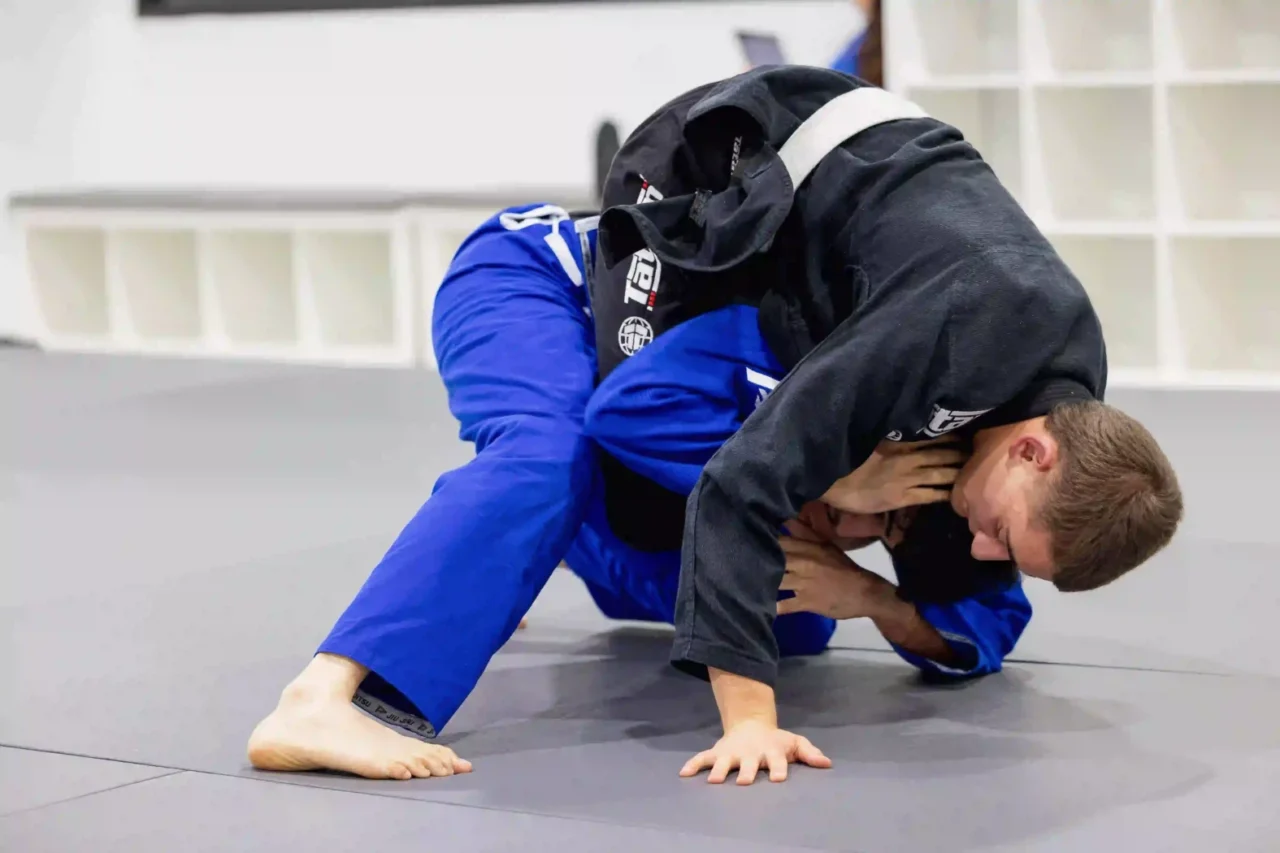
When your opponent maintains an upright spine, they command the leverage necessary to break open your legs and initiate heavy passing sequences. Neutralizing that vertical alignment immediately neutralizes their primary attacking weapons while opening continuous paths toward sweeps and submissions.

DISCOVER PROGRESSO JIU JITSU FRISCO
CLICK HERECore Mechanics: How to Control Posture in Closed Guard
Controlling posture is not a contest of static pulling, but a dynamic application of angles, friction, and synchronized physical barriers. By mastering the core structural points of connection, you systematically strip away your training partner’s structural base.
Breaking Spinal Alignment Through Head and Neck Control
The human body naturally follows the orientation of the cervical spine. By wrapping the crown of the head or cupping the nape of the neck with an active collar tie, you compromise their ability to look upward and stack their vertebrae.
Pairing neck pressure with a slight forward angle forces their forehead downward toward your chest. This mechanical tilt eliminates their hip drive, rendering explosive posture recovery attempts inefficient and exhausting.
Utilizing the Clench of the Active Guard Knees
Many practitioners mistakenly rely solely on grip strength while leaving their lower half passive. Your thighs and knees are far stronger than your biceps and should actively pull your opponent forward on every exchange.
When you bring your knees toward your shoulders in unison with your upper body grips, you eliminate the negative space between your torsos. This coordinated motion breaks their vertical center of gravity effortlessly.
Establishing Deep Cross-Collar and Overhook Grips
A deep cross-collar grip acts as an unbreakable lever against the sternum and clavicle. Feeding four fingers deep behind the neck allows you to anchor your elbow tightly to your own ribs, welding their chest to yours.
Alternatively, securing an overhook clamps their shoulder and isolates one arm from framing. This dual-threat grip prevents them from posting a hand on your stomach to push themselves upright.
Managing Distance and Hip Elevation Dynamics
Maintaining flat hips on the mat gives the top player stability and balance to build their base. Lifting your hips slightly off the canvas transfers your body weight directly onto their thighs and lumbar spine.
Understanding how to control posture in closed guard requires keeping their hips loaded onto your pelvis. By elevating and shifting your hips off-center, you deny them the level platform required to lock out their arms.
Neutralizing Opponent Frames and Posture Reset Attempts
Experienced passing artists will immediately establish rigid frames on your hips, chest, or belt to regain posture. Successfully defending your guard means recognizing these frames early and redirecting their energy before they solidify.
Clearing Bicep and Hip Frames with Two-on-One Controls
When the top player plants both palms firmly against your floating ribs or hips, pulling directly forward becomes nearly impossible. Applying a two-on-one wrist control allows you to strip their primary posting arm across their centerline.
Once the posting arm is deflected, their rigid frame collapses instantly. You can immediately pull them back into your chest before they have the chance to reset their defensive framing structure.
Addressing Belt and Lapel Gripping Counters
Opponents often grip your jacket lapels or belt near the hip bones to pin your pelvis to the mat. Breaking these grips requires a rapid upward hip pop combined with an outward circular wrist motion.
Failing to address double-lapel grips allows the passer to establish a rigid wooden-plank posture. Stripping one hand immediately breaks their symmetry and forces them into defensive re-gripping.
Redirecting Arm Drive with the Arm Drag Concept
The arm drag is an aggressive way to counter an opponent attempting to press off your chest. By reaching across to their triceps and pulling their arm across your torso, you bypass their defensive frames entirely.
This directional redirection forces their shoulder forward and downward into empty space. From here, their posture is completely shattered, presenting an immediate pathway to back takes or dominant sweeps.
Transitioning Broken Posture into Attacks and Sweeps
Controlling posture is not just a defensive stalemate; it is the launchpad for your entire offensive arsenal. Once their head is held low and their weight is collapsed forward, their vulnerability to submissions skyrockets.
Setting Up the High Guard and Shoulder Clamp
Once the top player is broken down, shifting your legs high across their back locks them into a high guard. Pinching your knees around one of their shoulders immobilizes their spine and eliminates their base.
From this elevated position, your opponent cannot lift their head without lifting your entire body weight. This dramatic mechanical disadvantage provides instant setups for triangles and armbars.
Creating Angles for the Triangle Choke and Omoplata
Attacking effectively from the closed guard demands that you move your hips off the centerline rather than staying squared up. Angling your body forty-five degrees places their neck and isolated arm directly in line with your leg clamping mechanics.
When an opponent attempts to push their posture back up with one arm inside your thighs, you can pivot sharply. That sudden angle change feeds their neck directly into a locked triangle or shoulder lock.
Combining Hip Heists with Scissor and Flower Sweeps
If an opponent commits excessive energy into jerking their torso backward to escape, use their momentum against them. Releasing your guard and executing a hip heist allows you to follow their upward motion directly into top mount.
Alternatively, chopping their posted knee while their weight is shifted forward yields high-percentage flower and pendulum sweeps. Using their own posture recovery impulses against them is the hallmark of efficient grappling.
Technical Training Guidelines for Sustainable Guard Retention
Consistent success from the guard stems from cultivating muscle endurance and timing rather than squeezing with desperate tension. Practicing how to control posture in closed guard during live positional rounds teaches you to feel the micro-shifts in an opponent’s center of gravity before they explode upward.
At Progresso Jiu Jitsu Frisco, practitioners learn to integrate active grips with intelligent leg clamps under direct coaching supervision. Developing this technical foundation ensures that training remains safe, progressive, and deeply effective for long-term skill acquisition.
Consolidating Posture Breakdown Principles on the Mat
Mastering posture control requires blending head control, active knees, grip breaking, and rotational angles into a continuous loop. Whenever the top player attempts to erect their spine, your response should be instantaneous, smooth, and grounded in leverage.
Instead of fighting their natural strength head-on, redirect their posts and take away their points of contact. By making your guard heavy and dynamic, you will consistently turn defensive dilemmas into dominant attacking opportunities.
DISCOVER PROGRESSO JIU JITSU FRISCO
CLICK HEREElevate Your Bottom Game with Technical Precision
Knowing how to control posture in closed guard gives you the tactical confidence to dictate matches from the bottom position without exhausting your energy. When technique replaces brute force, every round becomes an opportunity for refined problem-solving and technical mastery.
For martial artists training in Frisco and nearby Plano or Richardson, developing clean posture control turns defense into consistent offense. Visit Progresso Jiu Jitsu Frisco to refine your techniques alongside our dedicated training community in the Dallas–Fort Worth area.