
Balance Begins With a Reliable Base
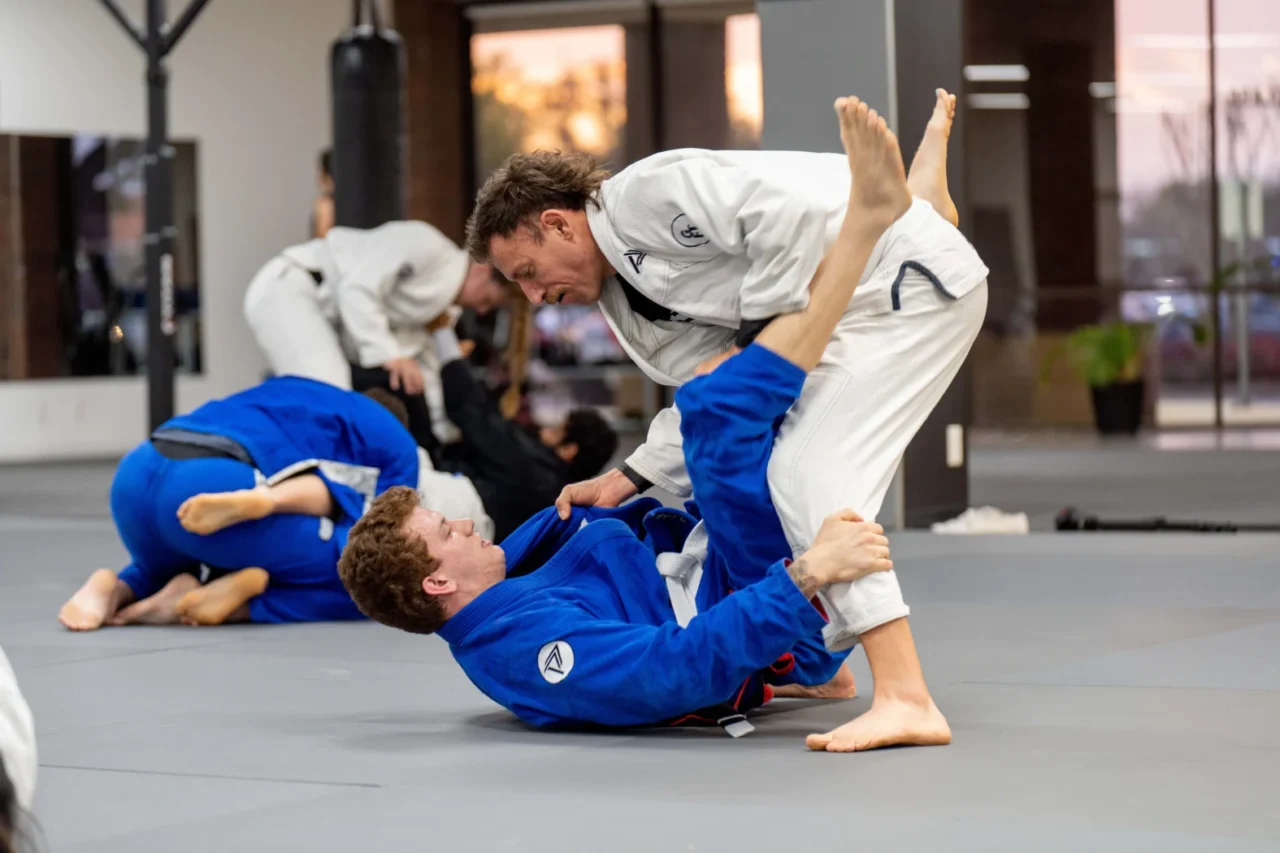
In Jiu-Jitsu, balance is about more than staying upright. You need a base that lets you respond when a partner changes direction, whether you are standing, passing guard, or working from the mat. A stable position gives you time to think instead of rushing to recover after every movement.
At Progresso Jiu Jitsu Plano, our Fundamentals classes give students room to explore the principles behind each movement. These five habits can help you notice where your base is strong, where it becomes vulnerable, and what to ask about during practice. They are starting points to work through with our instructors, not a replacement for a class demonstration.
BUILD YOUR FOUNDATION AT PROGRESSO JIU JITSU PLANO
CONTACT US TO TRY A CLASSNotice Where Your Weight Goes
1. Find the points supporting you
Before moving, notice what is holding you up. Your feet may support you while standing over a partner’s guard. On the mat, a knee or hand may become an extra point of contact. Base changes with the position, so there is no single stance to copy everywhere.
During a drill, pause for a moment and identify the points that would keep you from tipping if your partner changed direction. Then notice which contact you are about to lift. This question can make a movement easier to understand than simply trying to move faster.
More contact is not always better. Reaching too far for support can leave your weight behind or limit your next movement. Ask our instructors where your weight should be for the specific lesson. The goal is a base that supports the action you are practicing.
2. Keep your posture connected to your base
A position may feel solid until your upper body leans beyond the points supporting you. When your head and shoulders travel far ahead of your hips, your partner may have an easier time changing your balance. You do not need to be rigid; you need to notice when your posture stops helping your base.
Try observing this during a slow partner drill. When you lean, does your weight still feel centered over your supports? Can you return to a comfortable posture without pulling on your partner? That awareness can tell you more than a rule to “sit up straight” in every position.
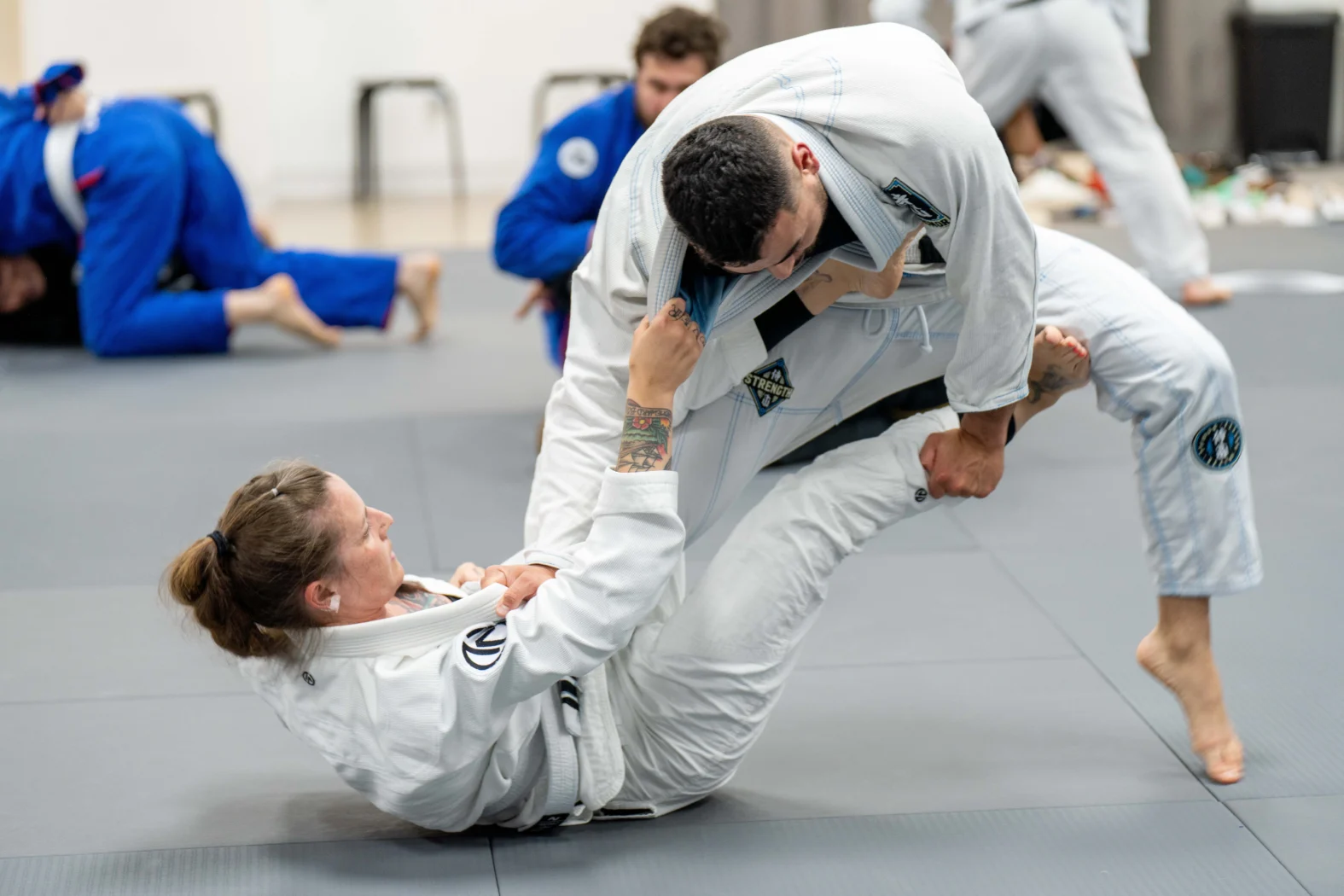
Posture matters from both sides of guard. The person on top looks for a stable way to move, while the person below may try to make that stability less certain. Our article on guard retention concepts explores another part of that exchange: maintaining useful positions as a partner moves.
Move Without Leaving Your Base Behind
3. Shift your weight before changing support
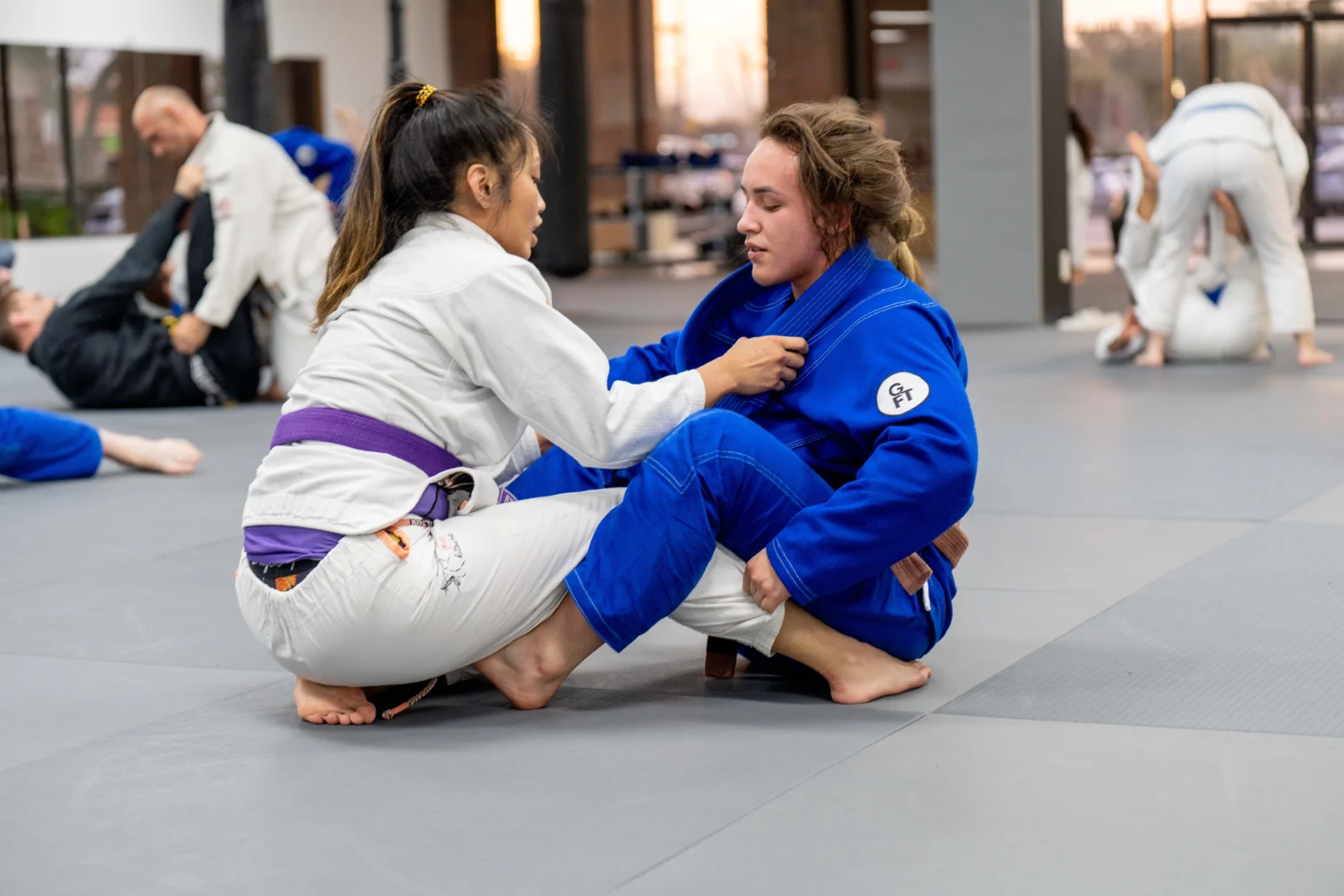
Moving a foot or knee can be difficult when most of your weight is resting on it. In a controlled drill, notice whether you can shift enough weight to free the support you want to move. This is a small detail, but it can make the transition feel smoother and less hurried.
Think of standing up from a chair: you organize your weight before your feet take over. Jiu-Jitsu positions are more varied, yet the same question helps: what must support me while this other point moves? Ask about that question when a transition feels unstable rather than repeating it at full speed.
The answer depends on the position and your partner’s response. A movement that works during a cooperative repetition may change when your partner adds pressure. That is why we practice with a partner and use feedback from the exercise, not just a picture of the final position.
4. Treat your partner’s pressure as information
When a partner pushes or pulls, the first instinct can be to push back harder. Sometimes that makes you lean farther away from a reliable base. Instead, notice where the pressure is taking your weight and whether you still have support in that direction.
In a slow drill, ask your partner to pause when you begin to feel off balance. Look at your feet, knees, or hands and ask our instructor what changed. This turns a frustrating moment into a useful observation. You can then repeat the exercise with a clearer idea of what to feel.
This habit is especially helpful if you tend to focus only on your own movement. Jiu-Jitsu is a conversation between two bodies: each person responds to the other’s position. Learning to notice pressure can help you make calmer choices without trying to overpower the person across from you.
Keep Your Base Through the Whole Exchange
5. Reset your balance after each transition
Reaching a new position is not the end of the movement. Once you arrive, check whether your base still supports you. Are you balanced enough to continue if your partner turns or changes direction? A brief reset can prevent one rushed transition from becoming several rushed reactions.
That reset might mean settling your weight, finding a useful point of contact, or adjusting your posture before you move again. The right choice varies by position, so bring the question to class. Over time, you may begin to recognize the moment when your base is ready for the next step.
Balance also matters when you are working out of a difficult position. Our article on foundational side control escapes addresses a different problem, but it likewise shows why the position you build before moving matters as much as the movement itself.
Practice the Principle, Then Ask About the Position
Pick one habit to watch in your next class. You might notice where your weight rests before lifting a knee, or how your posture changes when a partner applies pressure. Ask our instructors about the position you are practicing rather than trying to apply one fixed answer to every exchange.
Our Brazilian Jiu-Jitsu program includes Fundamentals classes for different experience levels. The Plano schedule can help you find a session that fits your week. Consistent practice gives you repeated chances to feel the difference between a stable base and a rushed one.
TRAIN WITH PROGRESSO JIU JITSU PLANO
CONTACT US TO TRY A CLASSStart With One Better-Understood Movement
Good balance in Jiu-Jitsu grows from paying attention to support, posture, weight shifts, pressure, and the position you reach next. You do not have to master all five ideas at once. Notice one detail during a drill, ask a question, and see what changes on the next repetition.
We would be glad to welcome you at Progresso Jiu Jitsu Plano. Contact us to try your first class and meet our team.