
Can Women Train Brazilian Jiu-Jitsu Without Previous Experience?
Yes. Women can start Brazilian Jiu-Jitsu without a martial arts background, and there is no need to arrive knowing the techniques. Your first classes are an opportunity to learn how training works, become comfortable with a partner, and build skills one step at a time.
For women considering Progresso Jiu Jitsu Plano, the appeal goes beyond learning submissions. BJJ offers a place to work on technique, challenge yourself, and connect with other practitioners. Understanding what those first steps involve can make walking onto the mats feel much more approachable.
DISCOVER Progresso Jiu Jitsu Plano
CLICK HEREWhy Technique Matters When You Start Training
One of the most useful lessons in BJJ is that positioning changes what you can do. Learning where to place your hands, how to move your hips, and when to shift your weight gives each movement a purpose. These are skills women can develop through instruction and practice, just like any other student.
Learning to Create Space with Frames
A frame is a structured position that helps you manage the space between you and a training partner. Beginners gradually learn how their arms and legs can support that structure, giving them a starting point when they feel crowded or unsure where to move.
That idea becomes easier to understand through a demonstration and a few slow repetitions with a partner. If you are preparing to visit the academy, learning what to expect in your first BJJ class in Plano can help you picture the training experience before you arrive.
Working with Partners of Different Sizes
Size and strength still matter in grappling. BJJ gives you technical tools for working with those differences, including positioning, timing, and balance. Learning a movement does not mean it will immediately work against every partner; applying it takes practice and experience.
For a beginner, progress might mean recognizing a position sooner or finding space that felt unavailable last week. Training with a cooperative partner makes room for those small improvements. The goal is to understand the movement and develop control at a pace you can follow.
Understanding Positions Before Chasing Submissions
Early classes can introduce unfamiliar names such as guard, mount, and side control. Recognizing these positions helps you understand what is happening during a drill and what your immediate goal might be. You do not need to memorize everything in one session.
A clear introduction to Brazilian Jiu-Jitsu fundamentals for beginners gives those details a framework. As the positions become familiar, instructions start to make more sense, and it becomes easier to connect one movement to the next.
Developing Balance Through Repetition
Balance is something you learn with a partner, not simply a quality you either have or lack. A small adjustment to your posture or weight can change how stable a position feels. Repeating that adjustment helps you notice the difference for yourself.
Some repetitions will feel smooth, while others will reveal something to work on. Both are part of learning. Over time, those experiences help you move with more intention and rely less on hurried reactions when a partner changes position.
How BJJ Can Support Self-Defense Awareness
Self-defense is one reason women become interested in Brazilian Jiu-Jitsu. Grappling practice can introduce ways to understand close contact, pressure, and movement on the ground. Training also has limits: a supervised class is different from an unpredictable situation outside the academy, and no technique guarantees a particular outcome.
Becoming More Aware of Distance and Position
Working with a partner helps you notice how distance affects your options. You begin to recognize when someone is close enough to control your movement and when there is room to reposition. That awareness develops through repeated practice with clear goals.
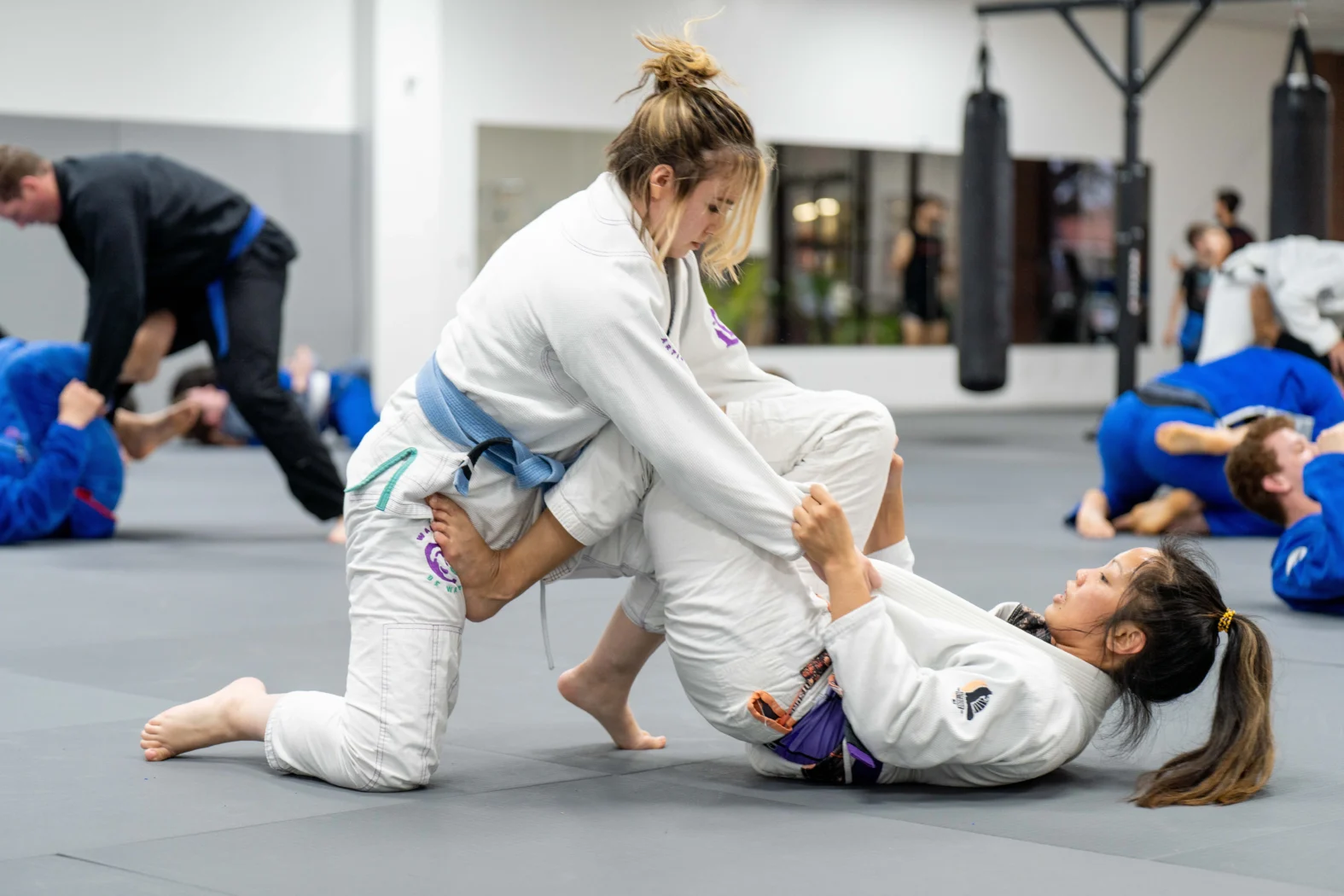
On the mats, basic guard retention concepts explore how to manage space while a partner attempts to move around your legs. For beginners, this is an introduction to positioning and decision-making within a training setting.
Practicing Escapes in a Controlled Setting
Being underneath a training partner can feel unfamiliar at first. Practicing an escape slowly gives you time to understand the position, ask questions, and work through the movement. A cooperative drill creates a different learning experience from immediately trying to escape full resistance.
As you gain experience, you can work with your instructor and partners to adjust the difficulty. Progress may be as simple as remembering the first part of an escape or recognizing when a movement is not working. Those observations help guide the next repetition.
Learning Control and Respecting the Tap
Submissions are part of BJJ, but learning them also involves learning responsibility. Students need to understand the purpose of the tap, communicate discomfort, and release a hold promptly when a partner signals. Control and communication belong in every stage of practice.
Positional work, including side control escape fundamentals, helps beginners focus on specific problems before linking more movements together. This gives a clearer purpose to practice and keeps attention on learning with a partner.
Building Confidence Through Training and Community
Women come to BJJ with different goals. Some want a new physical challenge, others are interested in self-defense, and many enjoy learning alongside a group. Your reasons can change over time as you discover which parts of training you find most rewarding.
Getting Comfortable with a New Physical Challenge
Moving on the ground, maintaining a position, and working with a partner may feel very different from your usual workout. That unfamiliarity is expected when you start a new activity. Give yourself time to learn the movements and understand the rhythm of a class.
You can begin with practical goals: follow the demonstration, complete a drill with care, or ask for help with a detail you missed. Discuss the pace with your instructor as you settle in. There is room to learn without measuring your first class against someone else’s experience.
Recognizing Small Signs of Progress
Confidence often grows through specific moments. You might remember where to place a grip, understand an instruction that previously confused you, or feel more comfortable asking a partner to slow down. These are useful signs that the environment and the movements are becoming familiar.
Not every class will feel like a breakthrough. Returning to a difficult position and noticing one new detail can still make the session worthwhile. Paying attention to those small changes gives you a more realistic way to evaluate progress than counting how often you win an exchange.
Finding Training Partners You Can Learn With
A positive training experience depends on how people work together. Partners who communicate, respect the tap, and respond to each other’s experience level make it easier to focus on learning. Beginners should feel able to ask questions and discuss the pace of a drill.
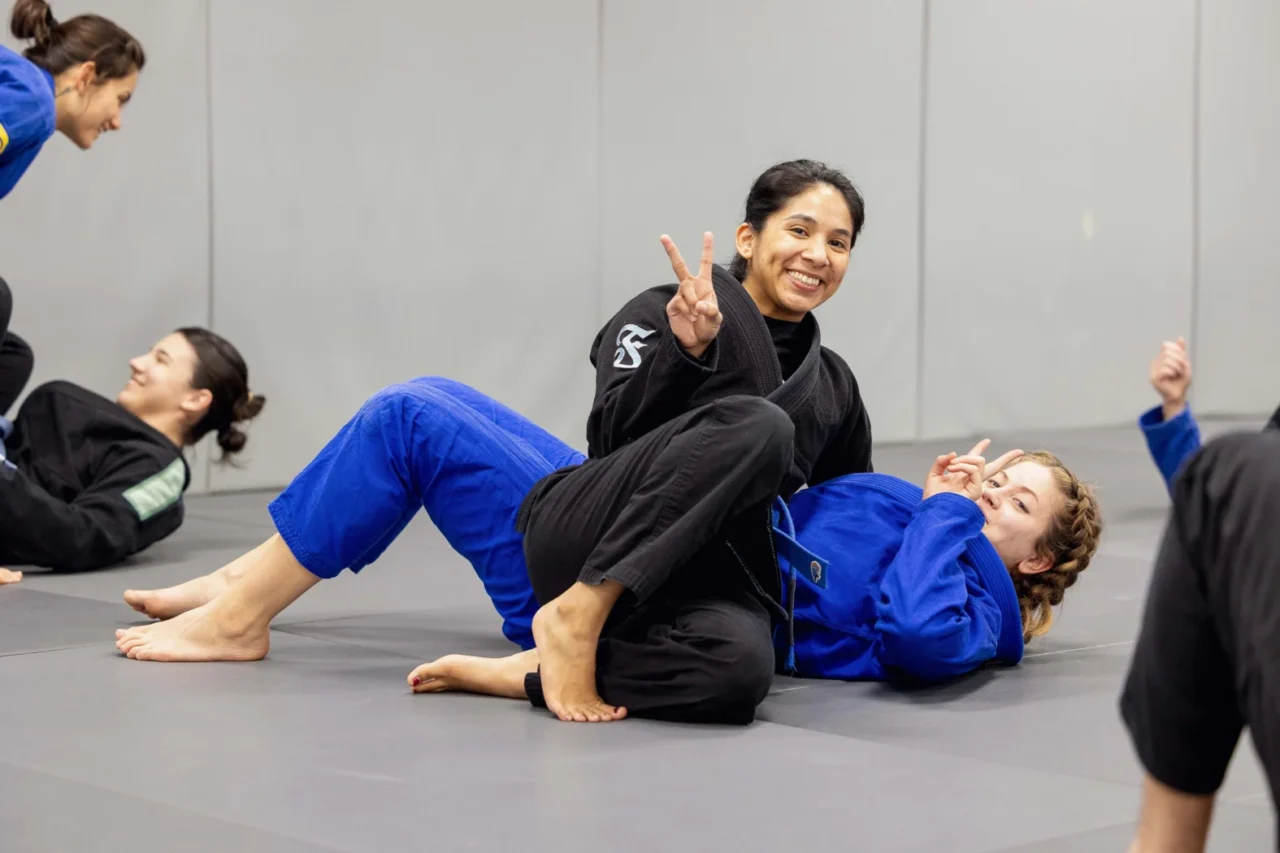
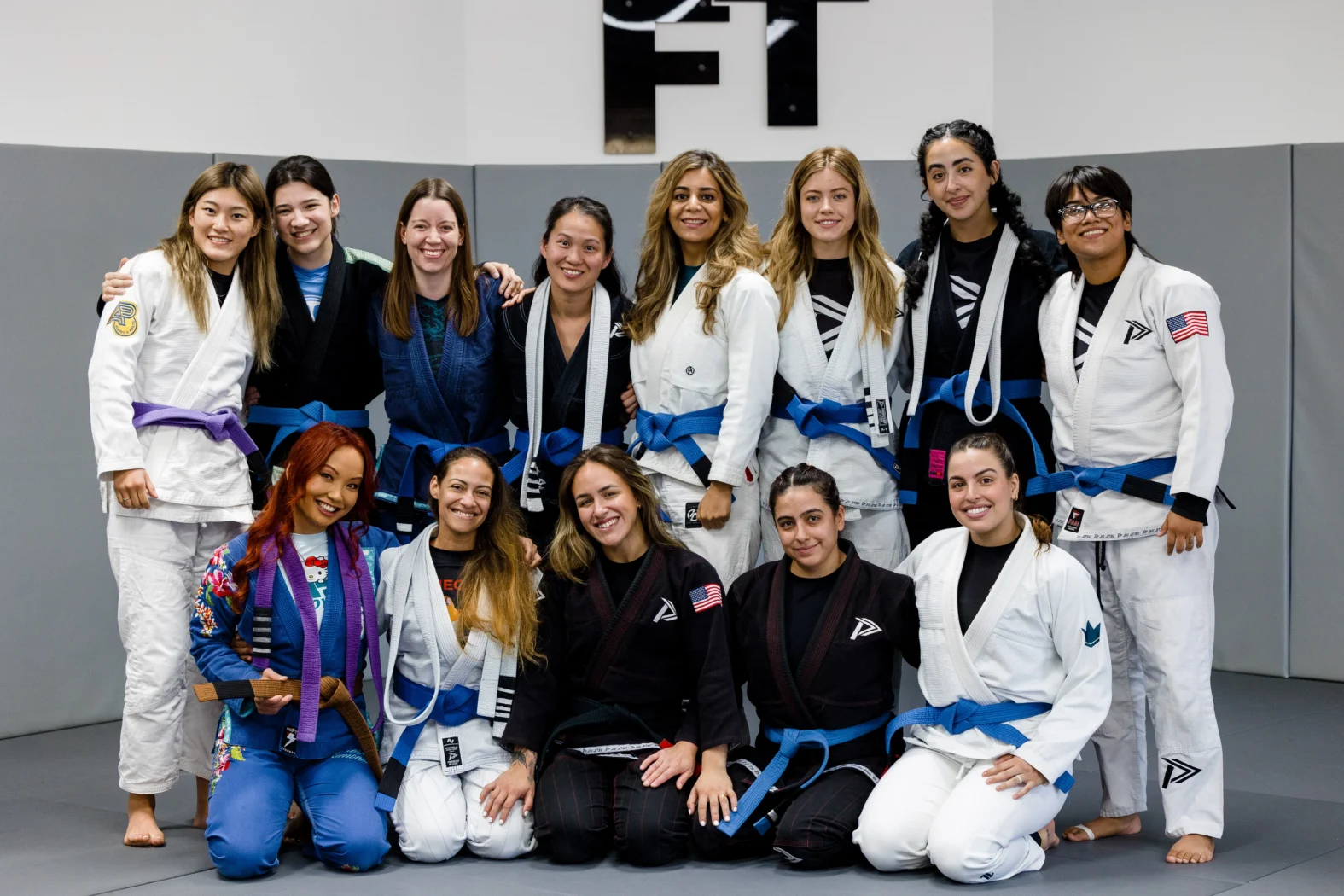
The women training together in the photos show another part of BJJ: sharing the mats with other practitioners. Conversations between rounds, familiar faces, and encouragement after a difficult drill can become meaningful parts of the routine alongside the technical work.
Taking Your First Steps in a BJJ Class
Before your first visit, ask about beginner class options, what to wear, and what you should bring. Let the instructor know that you are new and share any questions about partner work. Knowing these practical details can make the first session feel less uncertain.
When you contact Progresso Jiu Jitsu Plano, use that conversation to explain your goals and ask which class is a suitable starting point. During training, focus on the demonstration, take time with each repetition, and ask for clarification when a movement does not make sense.
Making Training Part of Your Routine
A manageable routine gives you opportunities to revisit what you have learned. Choose a schedule you can realistically maintain, then use each class to build on the last. You do not need to rush toward advanced techniques or compare your pace with more experienced students.
As you explore your options, you can also read about BJJ and Muay Thai training in Plano. Let your interests and availability guide your choices. For now, getting comfortable with the basics is a useful goal in its own right.
DISCOVER Progresso Jiu Jitsu Plano
CLICK HEREStarting Your Jiu-Jitsu Journey in Plano
Women do not need previous martial arts experience to begin learning Brazilian Jiu-Jitsu. Technique, familiarity, and confidence develop through practice. A first class is a chance to meet the instructor, experience partner drills, and decide whether the training fits what you are looking for.
If you are considering BJJ in Plano, contact Progresso Jiu Jitsu Plano to ask about getting started. Bring your questions, give yourself room to be a beginner, and take the first step toward a training routine that reflects your goals.